

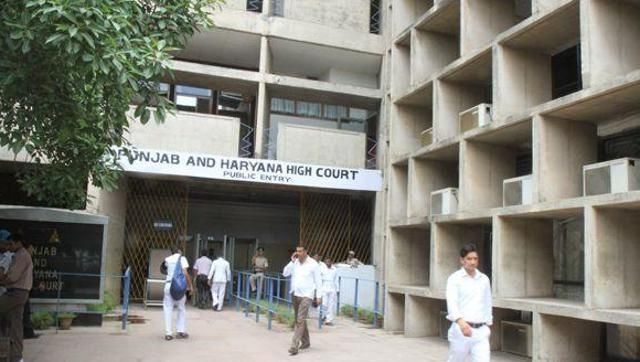
The Punjab and Haryana High Court, with jurisdiction over two Indian states and the Union Territory of Chandigarh, has played a pivotal role in shaping the constitutional, criminal, and civil jurisprudence of northern India. Through its incisive reasoning and progressive outlook, the Court has issued several landmark judgments that have not only influenced subordinate judiciary but also contributed meaningfully to national legal discourse. This article examines five such seminal decisions, analyzing their context, impact, and enduring significance.
1. Ranjit Singh v. State of Haryana (2013) – Witness Protection and Hostile Witnesses
In this case, the Punjab And Haryana High Court dealt with the increasing menace of witnesses turning hostile in criminal trials. The bench stressed the urgent need for a structured witness protection mechanism, observing that fear, intimidation, and coercion were undermining the administration of justice.
Analytical Insight:
The judgment underscored the judiciary’s proactive role in identifying legislative gaps and recommending policy frameworks.
2. Paramjit Kaur v. State of Punjab (1999) – Habeas Corpus and Police Accountability
This case arose during the height of militancy in Punjab. Paramjit Kaur filed a habeas corpus petition alleging illegal detention and enforced disappearance of her husband, Jaswant Singh Khalra, a human rights activist. The Punjab and Haryana High Court ordered a detailed inquiry, despite heavy resistance from state authorities.
Analytical Insight:
This was a bold assertion of judicial independence and a rare moment where the judiciary pierced the veil of state secrecy. The case later led to a CBI investigation and conviction of police officers. It became a symbol of the judiciary’s commitment to rule of law, even during periods of national crisis.
3. Iqbal Singh v. State of Punjab (2022) – Right to Internet as an Extension of Article 21
In a less-publicized but legally significant judgment, the Punjab and Haryana High Court held that access to the internet constitutes an essential part of the right to education and the right to life. The petitioner, a student facing restricted internet access in a remote village, approached the Court seeking relief.
The Court has acknowledged the digital access as very basic to the exercise of fundamental rights, coresponding the Supreme Court’s ruling in Anuradha Bhasin v. Union of India (2020), but extending it to an educational context.
Analytical Insight:
This judgment reflects judicial adaptability to contemporary challenges. In recognizing digital rights as fundamental, the Court not only expanded the scope of Article 21 but also pushed for infrastructural accountability from the state.
4. Rajiv Sarin v. State of Haryana (2011) – Forest Rights and Compensation
This judgment addressed whether the state could deny compensation for private forest land taken over under the Punjab Land Preservation Act, 1900. The petitioners contended that they were entitled to compensation despite restrictions imposed by environmental regulations.
The Court ruled in favor of the landowners, holding that just because the land was governed by forest laws did not negate the owners’ right to compensation under Article 300A of the Constitution.
Analytical Insight:
The decision emphasized the constitutional guarantee against arbitrary deprivation of property. It clarified that regulatory statutes, even those grounded in public interest like environmental laws, cannot override fundamental principles of due process and fair compensation.
5. Navtej Singh Johar v. Union of India (2018) – Punjab & Haryana HC’s Early Role in LGBTQ Rights
Though the final verdict came from the Supreme Court, the Punjab and Haryana High Court deserves mention for its preliminary observations in early cases concerning LGBTQ individuals. In ‘Simranjeet Singh v. State of Punjab’ (2017), the High Court emphasized the need to protect consenting adults in same-sex relationships from harassment. The bench, while not explicitly ruling on the constitutional validity of Section 377 IPC (since it was under SC review), recognized the autonomy of adults in intimate relationships.
Analytical Insight:
This case laid down the basis for recognition of same sex as protected under article 21.
It showcased high court willingness to extend constitutional protection even in the face of societal conservatism.
Role Of Punjab And Haryana High Court In Shaping Law
The Punjab and Haryana High Court has consistently given some crucial judgements that shape the legal sphere of India and has given some crucial judgements that maintains the rights of vulnerable citizens. Its judgments reflect a jurisprudence rooted in constitutional morality, individual dignity, and democratic accountability. From pioneering human rights protections to enforcing digital and property rights, the High Court’s landmark rulings have left a profound imprint on Indian legal thought.
As India’s legal system evolves, the continued assertiveness and adaptability of High Courts like that of Punjab and Haryana will be crucial in sustaining the spirit of constitutionalism.
Written By:
Aparna Gupta
